

0
 Added By admsolarpower
ADM Solar Power:Shaping World's Renewable Future With Smart Power Solutions
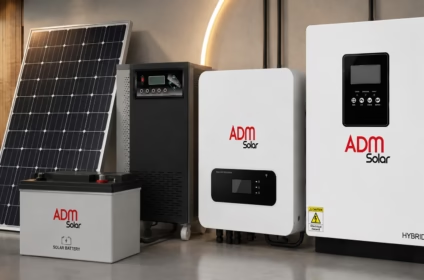
ADM Solar is one of the emerging solar panel ...
Suntech is a Manufacturer focused on photovoltaic technology, specializing in the research and production of crystalline silicon solar cells and solar modules. Founded in 2001, it has supplied photovoltaic modules worldwide, with business footprints spanning more than 100 countries. If you are sourcing PV components, Suntech’s product lines include a range of high-performance module formats such as half-cell and double-glass designs, and you can compare options based on your system requirements, expected operating conditions, and performance priorities.
When evaluating any PV manufacturer, including Suntech, it helps to look beyond the headline specification and confirm how the module design supports your application. For many buyers, key considerations include module power range, physical construction (for example, double-glass configurations), and whether the module type aligns with your installation method and durability needs. You may also want to review how the module’s electrical characteristics relate to system design goals such as string configuration, inverter compatibility, and energy yield expectations.
Choosing a photovoltaic module supplier often comes down to fit: your project’s technical targets, expected environmental exposure, lead time needs, and the way modules will be integrated into your system design. Suntech’s background emphasizes crystalline silicon PV research and production, and its global experience suggests it has been supplying modules across many markets. Use the guidance below to structure your supplier evaluation and procurement decision.
Suntech’s stated specialization centers on research and production of crystalline silicon solar cells and modules. For buyers, this matters because PV cell technology and module manufacturing processes can influence consistency, performance stability, and long-term reliability. In general, suppliers with a dedicated PV focus may be better positioned to support technical needs during procurement and system planning.
Suntech has supplied photovoltaic modules at a large cumulative scale and operates across more than 100 countries. While shipment scale alone does not guarantee compatibility with every project, it can be a useful indicator that the supplier has experience serving diverse buyers and installation contexts. As general guidance, request current product documentation and confirm the exact module configuration you intend to procure.
Suntech module offerings referenced in available materials include multiple half-cell and double-glass module formats, with variations such as N-type TOPCon designs and different frame or glass configurations. When comparing modules, treat each product variant as a separate option: compare power range, electrical layout, and physical build so you can select the most suitable match for your system design.
Buyer guidance: Use the example product names as a starting point. Confirm the exact module datasheet for the SKU you are considering, including electrical performance, temperature behavior, and mechanical dimensions needed for your mounting plan.
Even when a manufacturer offers multiple module types, the “right” selection depends on your project requirements. Use the checklist below to evaluate modules such as those in Suntech’s referenced half-cell and double-glass categories, while keeping your procurement process methodical and documentation-driven.
Different module variants are often offered with specific power ranges. For system designers, you typically want to align module power with your string design and inverter input range. As general guidance, review the datasheet values for power at standard test conditions and consider how module performance changes with temperature.
Some referenced Suntech options include monofacial and bifacial double-glass module categories. In general, bifacial configurations may be more relevant when your system design supports rear-side irradiation (such as specific mounting heights and reflective surfaces). Monofacial options may be simpler to model in environments where rear-side gain is limited.
Double-glass module descriptions can be relevant when buyers prioritize robust module packaging for long-term exposure. However, installation requirements such as mounting hardware compatibility, cable routing, and junction box placement can vary by SKU. As general guidance, verify mechanical drawings before ordering and ensure your installer’s mounting solution fits the module dimensions and frame details.
Because PV modules connect in strings, electrical compatibility impacts energy yield and safety margins. You should validate key datasheet parameters used in string design (for example, operating voltage behavior and current compatibility). If you are using trackers or multiple roof facets, check how shading or orientation differences may affect string performance.
If you are planning to purchase PV modules from Suntech as a Manufacturer option, consider these general procurement steps. These are not product-specific claims, but practical guidance to reduce risk and speed up your evaluation.
Available materials reference multiple Suntech PV module examples, including several half-cell N-type TOPCon double-glass categories with described power ranges and different frame references. Because module lines may change over time, treat these names and ranges as references for discussion with your sourcing team. Always validate the specific product specification sheet for the purchase you plan to make.
Buyer guidance: Power class selection should be based on your layout constraints, available roof or site area, and your design’s electrical targets. If you need help comparing module options, focus on the datasheet parameters that directly influence string design, energy modeling, and mechanical installation.
After you shortlist Suntech module variants, the next step is to collect and compare the official technical documents for each SKU. Prioritize clear, current datasheets and ensure the module’s electrical and mechanical characteristics match your project’s design assumptions. If you share your system context—such as whether you are designing for monofacial or bifacial behavior, your expected operating temperatures, and your mounting constraints—you can more confidently narrow the best-fit Suntech option from the manufacturer’s referenced PV module categories.
For faster login or register, use your social media account.






 Login with Google